Myopia, or short-sightedness, is common among children in Singapore, with over half developing it by the age of 12. Around 20% of children here also have the more severe form, called high myopia, which is associated with a greater risk of eye complications later in life.
Understanding how to control myopia progression can help parents make informed decisions about their child's eye health. With regular eye examinations and appropriate management, it may be possible to slow progression and reduce the risk of developing high myopia.
What Is Childhood Myopia?
Childhood myopia is a refractive error that causes distant objects to appear blurred while close-up objects may remain clear. It commonly develops during the school years, as a child's eyes continue to grow.
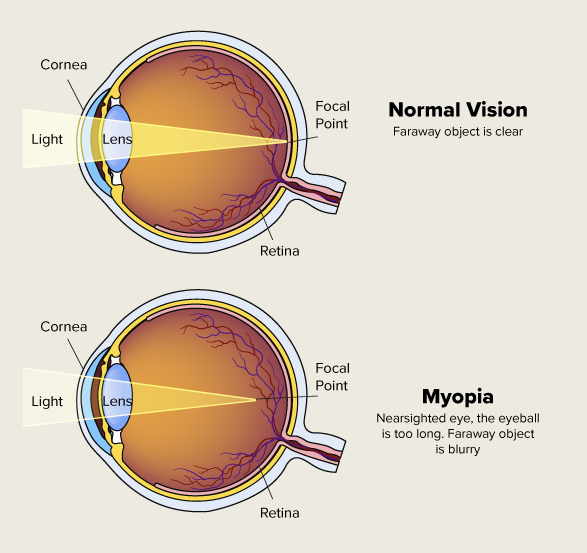
In many cases, myopia occurs because the eyeball grows too long from front to back. As a result, incoming light focuses in front of the retina rather than directly on it. The retina is the light-sensitive layer at the back of the eye that converts light into signals for the brain to interpret.
BOOK AN APPOINTMENT WITH US TODAY FOR MYOPIA CONTROL IN CHILDRENSymptoms of Childhood Myopia
Children may not always recognise or report changes in their vision. Parents and teachers can look out for signs such as:
- Difficulty seeing the whiteboard or other distant objects
- Squinting to see clearly
- Sitting unusually close to the television or holding books close to the face
- Complaints of tired eyes or headaches
- Difficulty following lessons because distant text or objects appear unclear
Book a Consultation with Our Eye Doctor
If you’ve noticed your child's vision worsening or requiring stronger lenses every year, it’s important to schedule a comprehensive eye examination.
Early intervention with a tailored myopia control plan from a pediatric eye specialist can help slow down the progression of nearsightedness and protect their long-term eye health.
Book An AppointmentWhat Causes Myopia?
Myopia develops when the eye focuses incoming light in front of the retina instead of directly on it. This commonly occurs when the eyeball grows longer than usual, although the shape of the cornea and other optical factors can also contribute.
A child's likelihood of developing myopia is influenced by a combination of genetic and environmental factors.
Primary Risk Factors for Myopia
Several factors are associated with a higher likelihood of developing myopia in childhood:
- Family history: Children with one or both short-sighted parents have a higher risk of developing myopia.
- Prolonged near work: Long periods of close-up activities, particularly without breaks, may be associated with myopia development and progression.
- Digital device use: Screen use often involves sustained near work and may contribute to patterns of visual activity associated with myopia.
- Limited outdoor time: Spending more time outdoors, particularly in daylight, is associated with a lower risk of developing myopia.
Risk of Untreated Myopia
Myopia can continue to progress as a child grows. Higher levels of myopia are associated with an increased risk of certain eye conditions later in life, including:
- Retinal tears and retinal detachment
- Glaucoma
- Myopic maculopathy
- Cataracts
Noticing symptoms of myopia in your children? See an eye specialist today.
Is your child holding books too close, squinting at the TV or board, or needing new, stronger glasses at every eye check-up?
These signs may indicate progressive myopia and require prompt evaluation for myopia control treatments by an eye specialist.
Book an appointment todayHow to Prevent Myopia and Slow It Down?
Although there is currently no cure for macular degeneration, early intervention may help slow progression and reduce the severity of symptoms. It is important to note that even after successful AMD disease treatment, further treatment may be required over time.
- Encourage daily outdoor activities
Aim for around one to two hours outdoors each day where practical. Spending time outdoors is associated with a lower risk of developing myopia.
- Take regular breaks during near work
Encourage your child to look away from books and screens regularly, particularly during prolonged periods of reading or homework.
- Maintain a comfortable working distance and suitable lighting
Encourage your child to avoid holding reading materials too close to their face and ensure that reading and study areas are adequately lit.
- Arrange regular eye examinations
Routine assessments can identify changes in vision and help an eye specialist determine whether further monitoring or myopia-control treatment is appropriate.
How Can Myopia Be Treated or Managed?
Myopia cannot currently be reversed or cured, but treatment can correct blurred vision and help slow its progression. The most suitable approach depends on your child's age, prescription, rate of progression and individual eye health.
Common myopia treatment options include:
- Myopia-control spectacles
Specially designed spectacle lenses provide clear vision while using optical designs intended to slow myopia progression.
- Myopia-control contact lenses
Certain contact lenses are designed to correct vision and help slow progression. Suitability depends on the child's age, eye health and ability to follow the required lens-care routine.
- Orthokeratology (Ortho-K)
These specially designed rigid contact lenses are worn overnight to temporarily reshape the cornea, allowing clearer vision during the day without glasses or contact lenses. Ortho-K may also help slow myopia progression, but careful fitting, hygiene and follow-up are essential because contact lens wear carries a risk of eye infection.
- Atropine eye drops
An eye specialist may prescribe atropine to help slow myopia progression. The concentration, suitability and potential side effects should be discussed with the prescribing doctor.
When Should You Get Your Child’s Eyes Checked?
Consider arranging an eye examination for your child during the preschool years, followed by regular checks as recommended by their eye-care professional. Children with diagnosed myopia may need more frequent assessments to monitor changes in their prescription and determine whether their management plan remains appropriate.
Do not wait for the next routine appointment if your child begins to squint frequently, struggles to see the whiteboard or experiences noticeably worsening distance vision. An eye examination can help identify the cause and determine whether further treatment is needed.